
 Search
 Master Trading: Essential Education & Market Analysis Guide
Comprehensive Guide to Trading Education and Market Analysis
In the world of trading, knowledge is power. As financial markets continue to evolve, it becomes increasingly important for traders—both new and experienced—to have access to accurate, comprehensive, and engaging educational resources. This article aims to provide an in-depth exploration of various trading concepts, tools, and methodologies that can empower traders to navigate the complexities of the forex and cryptocurrency markets. We will also delve into essential theories, particularly the Dow Theory, which has laid the groundwork for modern technical analysis.
Understanding Trading Basics
The Importance of Learning Trading Terminology
In any field, understanding the language and terminology used is crucial for effective communication and analysis. Trading is no exception. A solid grasp of basic trading terms and concepts allows traders to interpret market trends, make informed decisions, and engage in discussions with peers and professionals in the industry.
Wikibit serves as an invaluable resource for traders, offering a comprehensive glossary of trading terms ranging from the most basic to advanced jargon. By familiarizing themselves with this terminology, traders can build a strong foundation upon which to develop their trading skills.
Engaging with Interactive Learning
One of the key features of Wikibit is its interactive quizzes designed to test and reinforce a trader's knowledge. With over 50 quizzes available, users can assess their understanding of various trading concepts and compare their scores with others. This gamified approach not only makes learning more enjoyable but also encourages traders to continuously engage with the material, enhancing retention and understanding.
The Fun and Easy Approach to Forex Trading
Wikibit emphasizes a fun and easy-to-understand format for learning how to trade forex. Its platform allows users to learn at their own pace, making it accessible for individuals with varying levels of experience. By breaking down complex concepts into digestible chunks, Wikibit empowers traders to grasp essential skills without feeling overwhelmed.
Exploring the Cryptocurrency Landscape
Navigating the Crypto Jungle
As cryptocurrencies have gained popularity, the need for education in this area has become paramount. Wikibit offers comprehensive guides that explore popular coins and tokens, such as Bitcoin, Ethereum, and others. These guides aim to help users better navigate the often confusing landscape of cryptocurrencies, providing insights into market dynamics, investment strategies, and potential pitfalls.
Decoding Cryptocurrency Jargon
The cryptocurrency market is rife with jargon that can be daunting for newcomers. Wikibit's Decryptopedia™ serves as a valuable tool for deciphering this terminology, translating complex concepts into plain English. By demystifying the language of crypto, Wikibit helps users feel more confident as they embark on their trading journeys.
Tracking Progress in Crypto Education
Wikibits School of Crypto allows users to track their learning progress and assess their understanding through quizzes specifically designed for the cryptocurrency market. This feature not only reinforces learning but also fosters a sense of community among traders who can share their experiences and insights.
Advanced Trading Tools
Currency Correlation Calculator
For traders looking to deepen their analytical skills, the Currency Correlation Calculator is an essential tool. This feature helps users identify the strength of relationships between various currency pairs, providing insights into how different markets move in relation to each other. Understanding these correlations can lead to more informed trading decisions and risk management strategies.
Real-Time Market Insights
Wikibit provides real-time updates on the forex market, allowing traders to determine whether the market is open and what the current trading session is based on their local time zone. This information is crucial for timing trades and making the most of market opportunities.
Risk-On/Risk-Off Meter
Market sentiment plays a significant role in trading decisions. The Risk-On/Risk-Off Meter offered by Wikibit helps traders gauge the prevailing risk sentiment in the market, enabling them to make trades that align with current market conditions. By understanding when to adopt a risk-on or risk-off approach, traders can better manage their portfolios and optimize their performance.
Pivot Points for Support and Resistance Levels
Determining significant support and resistance levels is a fundamental aspect of technical analysis. Wikibit's pivot point tool assists traders in identifying these crucial levels, which can serve as indicators for potential price reversals or continuations. By integrating pivot points into their trading strategies, traders can enhance their decision-making processes.
Gain and Loss Percentage Calculator
Wikibit also features a gain and loss percentage calculator, which allows traders to quickly assess the percentage of their account balance that they have won or lost. This tool is invaluable for tracking performance over time and making necessary adjustments to trading strategies.
Value Per Pip Calculation
Understanding the value per pip in a trading account's currency is essential for effective risk management. Wikibit provides tools to calculate this value, enabling traders to align their position sizes with their risk appetite. By properly managing risk, traders can protect their capital and increase their chances of long-term success.
Position Sizing for Effective Risk Management
Determining the appropriate amount of currency units to buy or sell is critical for controlling maximum risk per position. Wikibit offers resources and calculators that assist traders in making these calculations, ensuring that they can manage their exposure effectively while pursuing profitable trades.
Delving into the Dow Theory
The Historical Context of Dow Theory
The Dow Theory is one of the foundational pillars of technical analysis, originating from the observations of Charles H. Dow in the late 19th century. Dow's insights stemmed from his analysis of stock price movements, which he noted tended to follow identifiable trends. In 1897, he established two primary market averages—the “Industrial Average,” which encompassed 12 blue-chip stocks, and the “Rail Average,” made up of 20 railroad companies. These averages laid the groundwork for what we now recognize as the Dow Jones Industrial Average and the Dow Jones Transportation Average.
Between 1900 and 1902, Dow published a series of articles in The Wall Street Journal that outlined his observations regarding stock market behavior. He viewed these averages not merely as predictive tools but as indicators of the overall business climate. Consequently, the Dow Theory emerged as a method of interpreting market trends rather than predicting specific price movements.
Evolution of Dow Theory
Following Dow's passing in 1902, his ideas were further expanded upon by his friend Samuel A. Nelson, who articulated Dow's methods in his book, “The ABC of Stock Speculation.” Subsequently, William P. Hamilton, who succeeded Dow as editor of The Wall Street Journal, refined these principles and published them in “The Stock Market Barometer: A Study of Its Forecast Value” in 1922.
The evolution of Dow Theory continued with Robert Rhea, who further developed the concepts in his influential work, “The Dow Theory of 1932.” Rhea's analysis solidified the principles of Dow Theory into a more structured methodology that has been built upon by subsequent generations of traders and analysts.
Core Principles of Dow Theory
The Dow Theory is built upon six fundamental assumptions that guide traders in their analysis of market trends:
1. The Averages Discount Everything
The foundational premise of the Dow Theory is that market averages reflect the collective actions and sentiments of countless traders, speculators, and investors. This means that all known information about a particular stock is already factored into its price. As new data emerges, market participants quickly assimilate this information, leading to price adjustments. Consequently, every conceivable event that could impact supply and demand is discounted by the market.
2. The Market Is Comprised of Three Trends
The Dow Theory posits that at any given moment, the stock market operates under three distinct trends: Primary trends, Secondary trends, and Minor trends. While Primary and Secondary trends are indicative of longer-term movements, Minor trends are often subject to short-term fluctuations and manipulations that can lead to misleading signals.
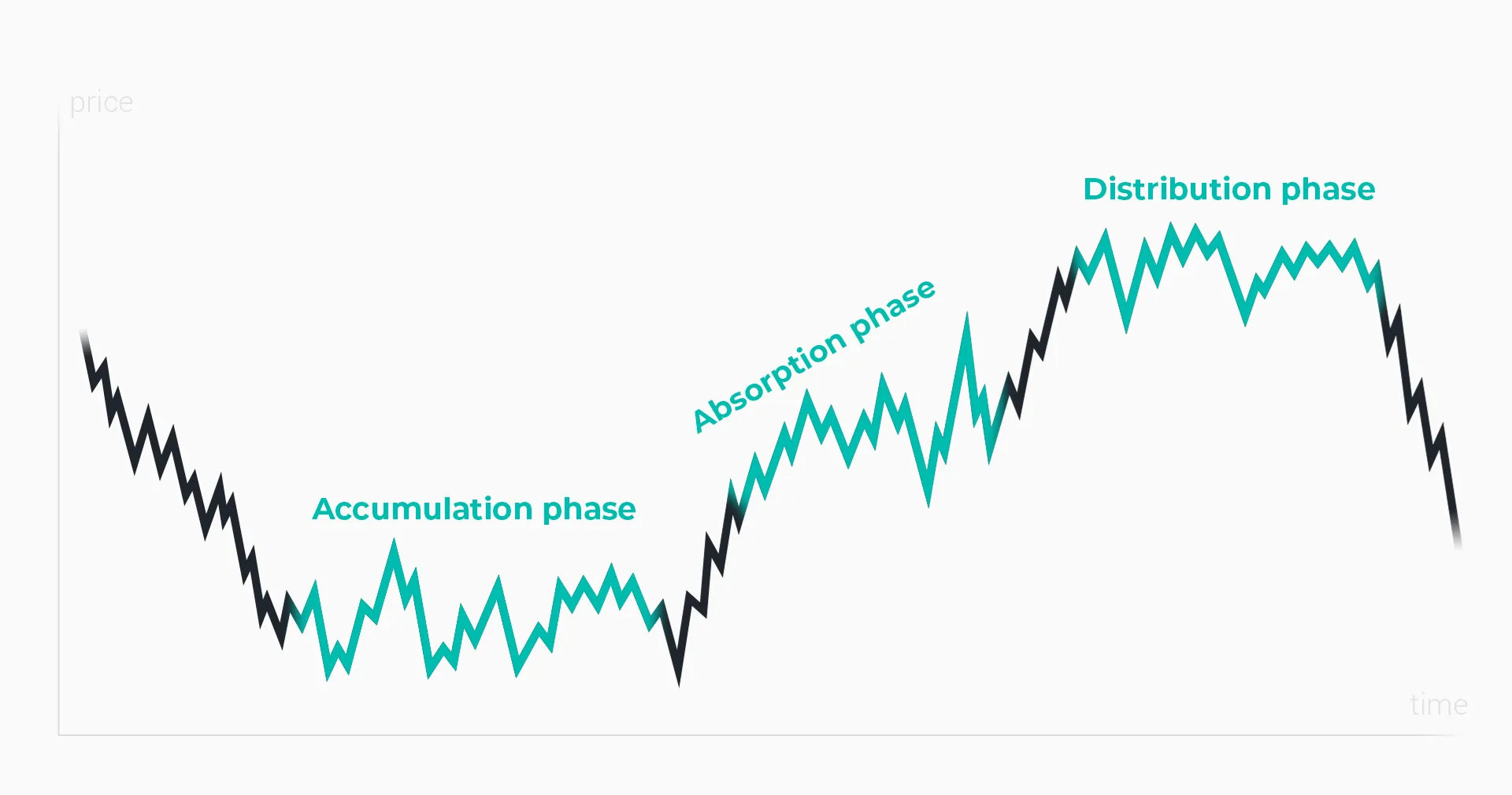
3. Primary Trends Have Three Phases
In the context of the Dow Theory, a Bull Market is characterized by an advancing Primary Trend, typically consisting of three distinct phases: accumulation, public participation, and excess. Conversely, a Bear Market is defined by a declining Primary Trend, which also comprises three phases: distribution, public participation, and panic.
4. The Averages Must Confirm Each Other
For a valid change of trend to occur, the movements of the Industrial and Transportation averages must confirm one another. This means that both averages need to extend beyond their previous secondary peaks (or troughs) for a trend change to be validated. If the two averages diverge, the reliability of the trend signal diminishes.
5. The Volume Confirms the Trend
While the Dow Theory primarily focuses on price movements, volume serves as a crucial confirmation tool. A trend is considered valid when volume expands in the direction of the primary trend. Conversely, low volume during significant price movements can indicate weakness in the trend.
6. A Trend Remains Intact Until It Gives a Definite Reversal Signal
Trends in the market are typically defined by a series of higher highs and higher lows for uptrends, and lower highs and lower lows for downtrends. For a trend to be considered reversed, there must be at least one lower high and one lower low for uptrends, and vice versa for downtrends. When both the Industrials and Transports signal a reversal, the likelihood of a new trend continuing is heightened. However, it is essential to remain cautious, as the longer a trend persists, the greater the chance of a reversal.
Related Concepts in Trading
Moving Averages
A Moving Average (MA) is a widely used technical indicator that calculates the average price of a currency pair over a specified period. Moving averages serve multiple purposes in trading, including smoothing out price data, identifying trends, and generating buy or sell signals. They are particularly popular among forex traders due to their simplicity and effectiveness.
The Fourth Turning
The concept of the Fourth Turning refers to a cyclical pattern in societal development, characterized by periods of crisis and transformation. This theory posits that societies undergo generational cycles in which institutions are dismantled and rebuilt to address existential challenges. Understanding these cycles can provide traders with a broader perspective on market movements and societal trends.
Elliott Wave Theory
Named after Ralph Nelson Elliott, the Elliott Wave Theory (EWT) is a method of technical analysis based on crowd psychology. The theory posits that market movements follow a repetitive pattern of waves, reflecting the collective behavior of investors. By identifying these wave patterns, traders can anticipate future market movements and make informed trading decisions.
Volume in Trading
In trading, volume refers to the quantity of a particular asset that is traded over a specific period. It serves as a measure of market activity and liquidity, with higher volume indicating greater interest in an asset. Understanding volume dynamics can help traders gauge the strength of price movements and make educated decisions about entry and exit points.
Quantity Theory of Credit
The Quantity Theory of Credit is an economic theory that emphasizes the role of credit creation by banks in influencing economic activity. This theory posits that the supply of credit directly affects the overall level of economic output and can have significant implications for market movements.
The Path to Trading Success
The Mindset of a Successful Trader
As Eric Thomas famously stated, “When you want to succeed as bad as you want to breathe, then youll be successful.” This mindset is crucial for aspiring traders. Success in trading requires dedication, discipline, and a continuous desire to learn and improve. Traders must be willing to invest time and effort to develop their skills and knowledge.
Building a Trading Community
Wikibit fosters a supportive community of traders who share their experiences, insights, and strategies. Engaging with fellow traders can provide valuable perspectives and enhance the learning process. Collaboration and knowledge-sharing are essential components of growth in the trading world.
Conclusion
In conclusion, the journey to becoming a successful trader is multifaceted and requires a commitment to ongoing education and self-improvement. By leveraging the resources available through platforms like Wikibit, traders can equip themselves with the knowledge and tools necessary to navigate the complexities of the forex and cryptocurrency markets. Understanding key concepts like the Dow Theory and employing advanced trading tools can significantly enhance a trader's ability to make informed decisions and achieve their financial goals. As the financial landscape continues to evolve, staying informed and adaptable will be critical for long-term success in trading.
More News


TOP5 Forex Brokers
latest News


Best Forex Broker
