Search
 Master Forex & Crypto Trading with Candlestick Patterns
Comprehensive Guide to Trading: Understanding Forex, Crypto, and Candlestick Patterns
Trading in financial markets, particularly in the realm of Forex and cryptocurrencies, has become an engaging pursuit for many individuals around the world. As the landscape of trading evolves, it is crucial for aspiring traders to equip themselves with the necessary tools, knowledge, and understanding to navigate these complex environments successfully. This guide will delve into various aspects of trading, including essential terms, educational resources, and specific trading strategies focusing on candlestick patterns, particularly the engulfing pattern.
Understanding the Basics of Trading
Before diving into specifics, it is imperative to grasp the fundamental concepts of trading. Trading involves the buying and selling of financial instruments such as currencies, stocks, commodities, and cryptocurrencies in order to generate profit. Each of these instruments has its own dynamics, influenced by a plethora of factors including market sentiment, economic indicators, and geopolitical events.
The Forex Market: An Overview
Forex, or foreign exchange, is the largest and most liquid financial market in the world, with an average daily trading volume exceeding $6 trillion. Traders in the Forex market engage in currency pairs, such as EUR/USD or GBP/JPY. Each currency pair represents the value of one currency against another, and traders aim to profit from fluctuations in these values.
Key Terms in Forex Trading
To effectively participate in Forex trading, one must become familiar with a variety of trading terms and concepts. This includes understanding pips, spreads, leverage, margin, and lot sizes.
Pips: A pip is the smallest price move that a given exchange rate can make based on market convention. For most currency pairs, a pip is typically the fourth decimal place, with the exception of pairs involving the Japanese Yen, where it is the second decimal place.
Spread: The spread is the difference between the bid price (the price at which a trader can sell a currency) and the ask price (the price at which a trader can buy a currency).
Leverage: Leverage allows traders to control larger positions than their actual capital might suggest. For example, a leverage ratio of 100:1 means that for every $1 in a trading account, a trader can control $100 in the market.
Margin: Margin is the amount of money required to open a leveraged position. It is expressed as a percentage of the full position size.
Lot Size: In Forex trading, a lot size refers to the number of currency units you will trade. A standard lot is 100,000 units of currency.
The Crypto Market: Navigating the New Frontier
The cryptocurrency market has taken the financial world by storm over the past decade. With Bitcoin leading the charge, thousands of alternative coins (altcoins) have emerged, each offering unique features and possibilities. Unlike traditional markets, crypto operates 24/7, allowing traders to engage at any time.
Key Terms in Crypto Trading
Similar to Forex, the crypto market also has its own set of terms. Understanding these is crucial for effective trading.
Blockchain: A blockchain is a decentralized ledger that records all transactions across a network. It ensures transparency and security in cryptocurrency transactions.
Wallet: A cryptocurrency wallet is a digital tool that allows users to store and manage their cryptocurrencies. Wallets can be hardware-based or software-based.
Altcoin: Any cryptocurrency that is not Bitcoin is considered an altcoin. Examples include Ethereum, Ripple, and Litecoin.
Market Capitalization: This term refers to the total value of a cryptocurrency, calculated by multiplying the current price by the total supply of coins in circulation.
Educational Resources for Aspiring Traders
One of the most significant challenges for new traders is the learning curve associated with understanding the intricacies of trading. Fortunately, there are numerous resources available to help traders enhance their knowledge and skills.
Wikibit: A Comprehensive Educational Platform
Wikibit serves as an invaluable resource for traders, offering educational content that covers both Forex and cryptocurrency markets. It provides a plethora of tools, guides, and interactive quizzes to test and expand traders knowledge.
Glossary of Terms: Wikibit offers an extensive glossary where traders can find explanations for various trading jargons, making it easier to understand complex concepts.
Quizzes and Assessments: With over 50 trading quizzes, traders can gauge their understanding and see how they rank compared to others. This gamified approach to learning keeps traders engaged and motivated.
Progress Tracking: The platform allows users to track their learning progress, enabling them to identify areas of strength and those requiring further study.
Crypto Guides: For those venturing into the world of cryptocurrencies, Wikibit provides detailed guides on popular coins and tokens, helping traders navigate the often confusing crypto landscape.
Decryptopedia™: This feature helps users decode crypto jargon into plain English, simplifying the learning process for beginners who may find the terminology daunting.
Analyzing Market Sentiment
Understanding market sentiment is crucial for making informed trading decisions. Traders can evaluate market sentiment through various tools and indicators.
Risk-On/Risk-Off Meter
The Risk-On/Risk-Off (RoRo) Meter is a valuable tool that helps traders gauge the overall sentiment in the market. A "Risk-On" environment indicates that investors are willing to take on more risk, often leading to increased buying activity in higher-risk assets like stocks and cryptocurrencies. Conversely, a "Risk-Off" environment suggests that traders are seeking safety, leading to selling pressure in riskier assets and a flight to safety into stable currencies or gold.
Currency Correlation Calculator
The Currency Correlation Calculator is another essential tool that allows traders to identify the strength of relationships between different currency pairs. Understanding these correlations can help traders make more informed decisions about which pairs to trade, as well as manage risks effectively.
Candlestick Patterns: A Technical Analysis Tool
Technical analysis is a method of evaluating securities by analyzing statistics generated by market activity, such as past prices and volume. Among the myriad of tools available, candlestick patterns are a popular choice for traders seeking to anticipate market movements.
The Engulfing Pattern
The engulfing pattern is a significant reversal candlestick pattern that traders often look for to identify potential trend reversals. It is characterized by two candles, where the body of the second candle completely engulfs the body of the first candle.
Types of Engulfing PatternsThere are two primary types of engulfing patterns: the bullish engulfing pattern and the bearish engulfing pattern.
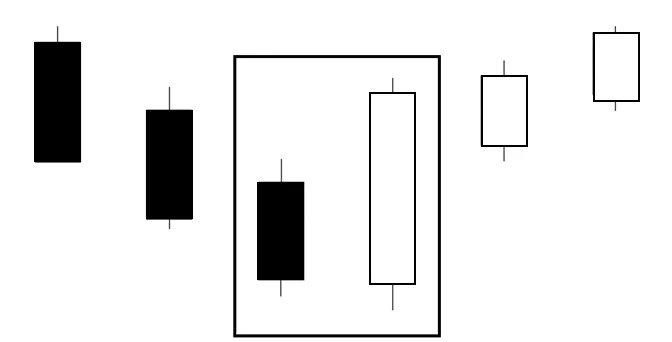
Bullish Engulfing Pattern: This pattern occurs at the bottom of a downtrend and is characterized by a small bearish candle followed by a larger bullish candle. The bullish engulfing pattern indicates a surge in buying pressure, suggesting that buyers are entering the market, which could lead to a reversal of the downtrend. Traders often look for confirmation of the bullish trend following the formation of this pattern.
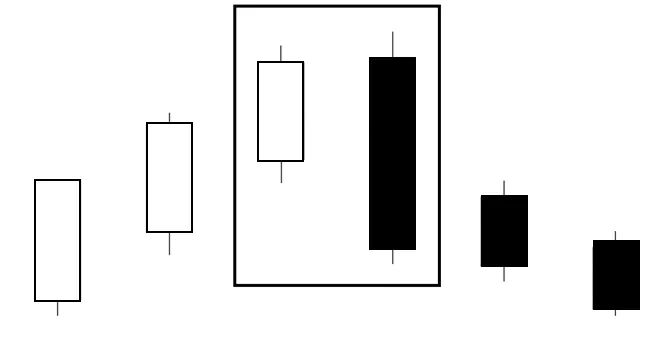
Bearish Engulfing Pattern: In contrast, the bearish engulfing pattern occurs at the top of an uptrend. It consists of a small bullish candle followed by a larger bearish candle that engulfs the first. This pattern signals a surge in selling pressure, indicating that sellers are beginning to dominate the market. As with the bullish engulfing pattern, traders seek confirmation of the bearish trend after observing this formation.
To effectively trade engulfing patterns, traders should wait for confirmation from subsequent price action. This confirmation could be a further price move in the direction of the engulfing pattern after it has formed. For instance, if a bullish engulfing pattern forms, traders might look for a subsequent bullish candle to validate their entry into a long position.
The Importance of Risk Management
As exhilarating as trading can be, it is equally crucial to understand the associated risks. Risk management is an essential aspect of trading that helps protect your capital and ensure long-term success.
Key Risk Management Strategies
-
Setting Stop-Loss Orders: A stop-loss order is a predetermined price level at which a trader will close a losing position to prevent further losses. This strategy is fundamental in preserving capital.
Position Sizing: Proper position sizing involves determining the amount of capital to risk on each trade. Traders typically use a percentage of their trading account to ensure that no single trade can significantly impact their overall capital.
Diversification: Diversifying one‘s trading portfolio by engaging in various asset classes or currency pairs can help mitigate risk. This strategy reduces the impact of any single asset’s negative performance on the overall portfolio.
Future Implications of Trading
As the world continues to evolve, so too does the realm of trading. The rise of technology, particularly artificial intelligence (AI) and machine learning, is reshaping how traders analyze data and make decisions. Automated trading systems, for example, allow traders to execute trades based on predefined criteria without human intervention.
The Role of Education in Future Trading
Given the rapid pace of change in financial markets, continuous education will be critical for traders looking to stay ahead of the curve. Platforms like Wikibit will likely play an increasingly important role in providing up-to-date information, educational resources, and community support for traders at all levels.
Conclusion
Engaging in Forex and cryptocurrency trading presents both tremendous opportunities and significant challenges. By equipping oneself with a solid foundation of knowledge, understanding essential trading terms, and employing effective strategies, traders can navigate these markets more effectively. The importance of risk management cannot be overstated, as it serves as the backbone of sustainable trading practices.
As we look toward the future, the integration of technology in trading, coupled with the ongoing need for education, will shape how traders operate and succeed in the dynamic financial landscape. By leveraging platforms like Wikibit and embracing a commitment to continuous learning, traders can position themselves for long-term success in the ever-evolving world of trading.
More News





TOP5 Forex Brokers
latest News


Best Forex Broker